
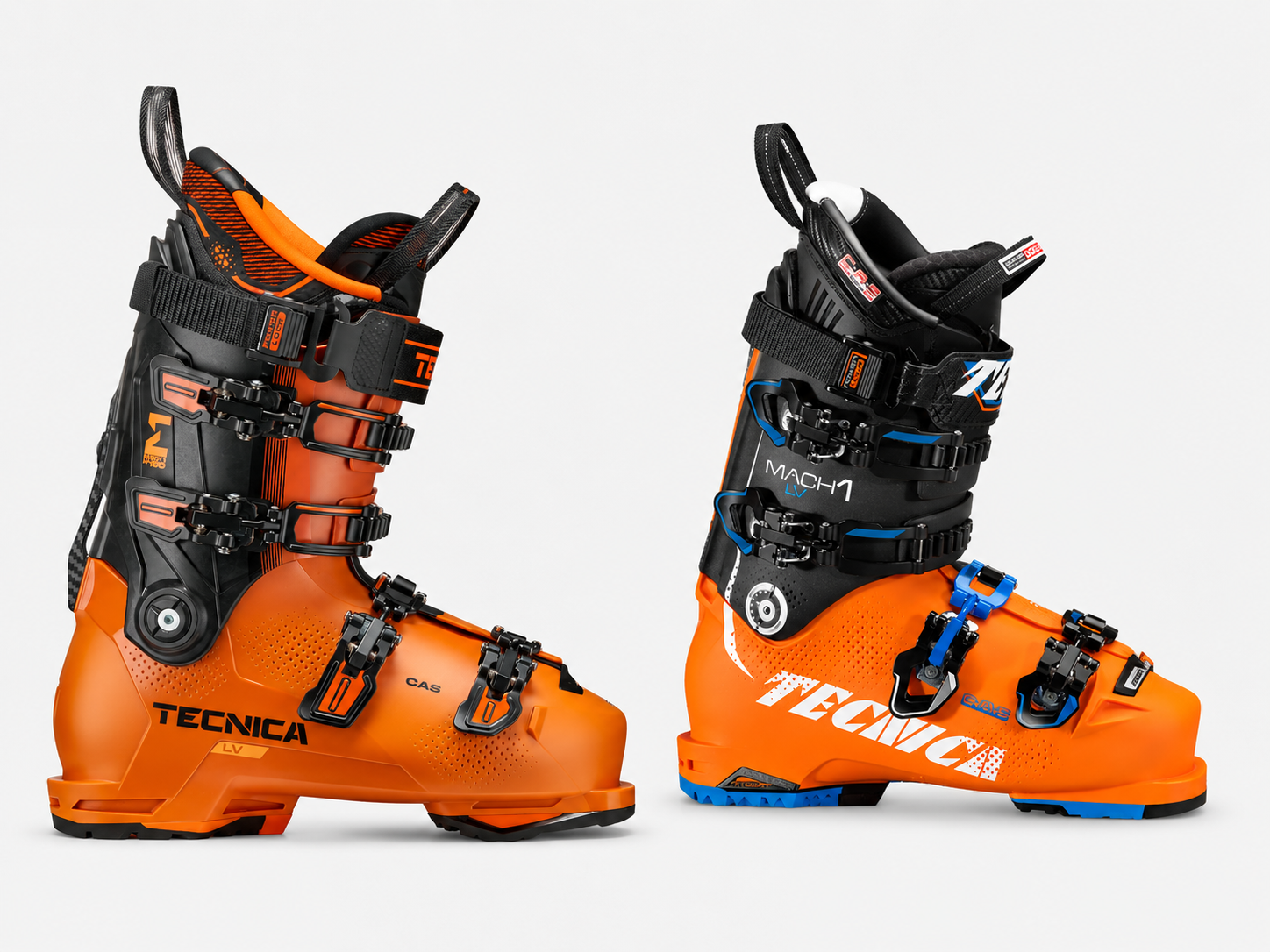
Many skiers shopping for new boots start with a simple request:
"I just want something like my old boots."
That makes sense. If your boots worked well for years, it is natural to want something familiar. But if your ski boots are 8, 10, or even 15 years old, a modern boot may feel noticeably different from what you remember.
That difference is not just marketing.
Modern ski boots have changed in meaningful ways. Liners are better shaped. Shells are more anatomical. Plastics are often lighter, stronger, and easier to modify. BOA closure systems have become more common. GripWalk soles are now standard on most recreational ski boots. Many boots are also easier to get on and off than older models, in part due to advances in plastic design such as dual-density plastics that allow for easier entry without sacrificing support.
For some skiers, these changes are surprising. A new boot can feel snugger but more comfortable. It can be easier to put on but still ski strong. It can walk better in the parking lot and still provide more control on snow.
If you are replacing older ski boots, understanding these changes can help you know what to expect and why a modern boot may not feel exactly like your old pair.
How Long Do Ski Boots Last?
Before looking at how ski boots have changed, it helps to answer a common question: how long should ski boots last?
At The Pro Ski and Ride, we generally recommend replacing ski boots after approximately 175-200 ski days or whenever the liner feels packed out and no longer holds the foot properly.
Even if a boot has not reached that number of ski days, we usually recommend replacing used ski boots after about 7-8 years. Ski boot plastics and liners degrade over time, especially once the boots have been used.
A boot that is older may still look fine from the outside, but the liner may be compressed, the plastic may be less reliable, and the fit may no longer provide the support it once did.
Common signs your older ski boots may be ready for replacement include:
-
You are maxing out your buckles or BOA system.
-
Your feet move inside the boots more than they used to.
-
The liner feels thin, flat, or packed out.
-
You feel like you are standing directly against the plastic shell.
-
The boots are increasingly difficult to buckle or close.
-
The soles are worn.
-
The plastic is cracking, brittle, or discolored.
-
The plastic flexes more than it used to.
-
The boots no longer provide the control they once did.
If your main issue is movement inside the boot, it may also be helpful to read our guide on how to know if your ski boots are too big.
Modern Liners Are More Supportive

One of the biggest improvements in ski boots over the last decade is liner quality.
Older liners often packed out quickly and lost their shape over time. Once that happened, skiers would tighten buckles more aggressively to try to regain control. Eventually, many skiers were no longer feeling supportive foam around their feet. They were feeling the plastic shell.
Modern liners are usually more shaped, more supportive, and more customizable. Better foam density and improved construction help hold the foot more evenly throughout the boot.
This is one reason many skiers are surprised when they try on new boots.
They expect a new boot to feel painful or overly tight. Instead, many find that the boot feels snug, supportive, and comfortable at the same time.
That feeling can be very different from an older packed-out boot. A modern liner should help hold the heel, ankle, and midfoot more securely without relying only on buckle pressure.
For skiers with older boots that still have good shells, replacement liners can sometimes extend the life of the boot. We carry and fit premium aftermarket liner options, including ZipFit liners, when appropriate.
However, if the shell is too old, too large, or in poor condition, a new boot may be the better long-term solution.
Shell Shapes Are More Anatomical
Modern ski boots are not just generic plastic boxes for your feet.
Manufacturers have become much better at designing shells around actual foot shapes. Many brands now use advanced design tools, including 3D scans and more refined lasts, to build boots that fit more anatomically across different sizes and volumes.
This has led to a better out-of-the-box fit when the correct boot is selected.
Modern shells often offer:
-
Tighter heel pockets
-
Better ankle retention
-
More sculpted forefoot shapes
-
More defined instep shapes
-
Better cuff alignment with the lower leg
-
More specific low-volume, medium-volume, and high-volume options
This is especially important because ski boot fit is not only about length.
Two skiers can have the same foot length but need completely different boots because of differences in heel width, ankle shape, instep height, calf shape, arch height, and overall foot volume.
Manufacturers are now more explicit about different boot volumes, which helps boot fitters start with a shell that better matches the skier's foot.
For a broader overview of fit, flex, and boot selection, see our Ski Boots Buying Guide.
Plastics Have Improved
Ski boot plastics have also improved.
Modern plastics are often lighter, stronger, flex more consistent across a range of temperatures, and easier for boot fitters to work with. This does not mean every new boot is automatically better than every old boot, but plastic technology has made a noticeable difference in how many boots fit, flex, and modify.
Some modern boots use different density plastics in different areas of the shell. This can make the boot easier to open when getting in and out while still providing strong support once the boot is buckled.
That surprises a lot of skiers.
One mother of a junior racer came into our store because her 11-year-old boots had become too difficult to put on. She considered herself an advanced skier and did not want "soft" boots.
When she tried on newer boots, she was impressed by how easy they were to get on. At first, that made her nervous. She assumed easier entry meant less performance.
But once the boots were buckled, she realized they still had the support she wanted. The difference came from improved plastic design, not from making the boot "too soft".
Modern plastics can also be easier to heat and shape during the boot fitting process. Many manufacturers now design shells with customization in mind, which can help a qualified boot fitter create space in specific areas without compromising the overall fit.
Modern Boots Often Flex More Consistently
Older boots could feel dramatically different depending on temperature.
A boot that felt manageable indoors might feel extremely stiff outside on a cold day. While temperature still affects ski boot plastics, many modern materials are designed to provide a more consistent flex across changing conditions.
That matters because flex affects how a boot transmits energy from your body to the ski.
A boot that is too soft may lack support. A boot that is too stiff may limit movement, force a skier into the backseat, or make it harder to pressure the ski effectively.
Modern boots offer a wide range of flex options, and the right choice depends on skier size, strength, ability, stance, technique, and goals.
For more detail, read our guide on what ski boot flex ratings really mean.
BOA Has Changed How Some Boots Close

BOA closure systems have become increasingly common in ski boots, especially in the lower shell, and in some models, the upper cuff as well.
As boot fitters, we are not automatically pro-BOA or anti-BOA. The right closure system depends on the skier, the foot, and the boot.
Many skiers do love the "wrapping" feel created by BOA. Instead of pulling pressure from a few buckle points, BOA can help distribute tension more evenly across the foot or cuff, depending on the boot design.
This can be especially noticeable for skiers who are used to cranking buckles aggressively.
A retired FDNY firefighter came into the shop after about eight years in the same boots. He did not like change and was hesitant about trying something different. After trying the updated version of his boots with BOA, he immediately appreciated how easy the system was to close.
He spent less time forcing buckles into place, the liner felt warmer than what he was used to, and the GripWalk soles made it easier to walk around. Later that afternoon, he came back to tell us that the fit was great, but the quality-of-life improvements were just as meaningful.
That does not mean BOA is right for everyone. Traditional buckle boots are still excellent and widely available. Some skiers prefer the familiar feel and adjustability of buckles.
For a deeper look at the benefits and limitations, read our full guide: BOA Ski Boots: Are They Really Worth the Hype?
GripWalk Has Improved Walking
One of the most noticeable changes in recreational ski boots is the widespread use of GripWalk soles.
GripWalk heels and toes are now standard on most recreational ski boots. Compared with older flat alpine soles, GripWalk soles are designed to provide better traction and a more natural walking feel.
That can make a real difference in:
-
Parking lots
-
Icy walkways
-
Lodge stairs
-
Rental areas
-
Sidewalks
-
Carrying gear to and from the mountain
For many skiers, this is not a performance feature they notice while skiing. It is a comfort and safety feature they notice everywhere else.
However, compatibility matters. GripWalk boots must be used with compatible bindings, and any binding adjustment should be handled and tested by a certified shop technician.
If you are replacing older boots with GripWalk boots, your bindings will need to be evaluated before you ski.
Modern Boots Can Be Easier to Get On and Off
A ski boot that is hard to put on is not automatically a better boot.
Older performance boots often felt difficult to enter because of stiff plastic, tight overlap designs, and less forgiving shell shapes. While some high-performance and race boots are still intentionally demanding, many modern recreational and performance boots are easier to get on and off than older models.
This can come from:
-
Updated shell overlap designs
-
Different density plastics
-
Softer entry zones
-
Improved liner construction
-
Better cuff shapes
-
More thoughtful buckle or BOA placement
For skiers replacing older boots, this can be a major benefit.
Parents, older skiers, patrollers, instructors, and anyone who skis frequently can appreciate a boot that is easier to live with before and after skiing.
The important point is that easier entry does not always mean lower performance. A modern boot can be easier to put on and still provide strong support when properly buckled and fitted.
Boot Fitting Has Also Improved

Ski boots have improved, but so has boot fitting.
Modern boot fitting is not just about finding the closest size and hoping for the best. At The Pro Ski and Ride, our boot fitting process starts with evaluating the skier's foot shape, length, width, instep height, arch type, ankle shape, calf shape, range of motion, and fit goals.
Modern plastics are often easier to heat and shape. Some shells are designed specifically with modification in mind. Better liners, better footbeds, and more precise shell shapes allow fitters to solve problems more efficiently than in the past.
A long-time customer came in after her 10+ year-old boots finally broke. She was anxious about replacing them because the last time she bought boots, it took "six hours" to get the proper fit.
Rather than spot-adjusting every issue one at a time, we heat molded the shell to address multiple shape issues at once. The result achieved the same, if not better, fit with much less fitting time.
That does not mean every boot fit is instant. Some feet still require detailed work. But when the correct shell is selected from the beginning, modern materials and fitting techniques can often make the process more efficient and more effective.
For boots purchased in Hunter, NY at The Pro Ski and Ride, our Perfect Fit Guarantee helps support the fitting process after purchase.
Hybrid Boots Have Changed the Resort/Touring Crossover Category

Another major change over the last decade is the growth of hybrid ski boots.
These boots are designed for skiers who want strong downhill performance but also need touring features such as tech inserts, hike modes, lighter materials, and increased range of motion.
A ski patroller who regularly hikes up the mountain before his shift had been using an older alpine touring setup with frame bindings and regular boots. We switched him to a lightweight hybrid boot with strong but thinner plastic, pin tech compatibility, a hike switch, and much better range of motion.
The result was a much more pleasant morning trek due to reduced weight and increased mobility.
Hybrid boots are not the right answer for every skier. Some skiers are better served by a traditional alpine boot. Others need a true touring boot. But for patrollers, instructors, and skiers who split time between lift-served and touring use, the modern hybrid category is much stronger than it used to be.
Why New Boots May Feel Tighter Than Your Old Boots
If you are replacing old boots, your new boots may feel tighter at first.
That does not automatically mean they are too small.
A packed-out boot often gives a skier a false sense of comfort because the liner no longer holds the foot effectively. The foot moves more, the buckles are tightened more, and the skier slowly gets used to a loose fit.
A properly selected modern boot should hold the foot more securely. The heel should feel more stable. The midfoot should feel supported. The forefoot should feel shaped, not sloppy. Your toes may lightly touch the front when standing upright and pull slightly back when flexing forward.
That snug feeling can be surprising, especially for skiers coming from boots that are several years old.
The goal is not pain. Pain, numbness, burning, or sharp pressure should be addressed. But snugness and support are part of how a good ski boot transfers energy to the ski.
What Surprises Skiers Most About Modern Boots?
When skiers replace older boots, the most common surprise is that modern boots can feel comfortable and snug at the same time.
Many skiers expect comfort to mean extra space. But extra space often leads to movement, reduced control, and over-tightening.
Modern boots can feel different because:
-
The liner holds the foot more evenly.
-
The heel pocket is more secure.
-
The shell is shaped more anatomically.
-
The boot may be easier to get on and off.
-
The closure system may feel smoother or more even.
-
The soles may walk better.
-
The boot may need less modification than expected.
-
The skier may realize how packed out the old liner had become.
For many skiers, the biggest improvement is not one single feature. It is the combination of better shell shape, better liner support, better materials, and better fitting options.
When Does It Make Sense to Upgrade?

It may be time to consider new ski boots if:
-
Your boots are 7-8 years old or older.
-
You have roughly 175-200 ski days on them.
-
The liner feels packed out.
-
You are maxing out your buckles or BOA.
-
Your feet move inside the boots.
-
The boots are difficult to get on or off.
-
The shells or soles are worn.
-
Your skiing has changed.
-
Your old boots no longer provide the support or control they once did.
You do not need to replace ski boots just because a newer model exists. If your boots fit well, ski well, and remain in good condition, they may still have useful life.
But if your boots are old, packed out, uncomfortable, or no longer supporting your skiing, modern boots may offer a noticeable improvement.
Final Thoughts
Modern ski boots are not just newer versions of old boots.
They often fit differently, flex differently, walk differently, and modify differently. Liners are more supportive. Shells are more anatomical. Plastics are more advanced. BOA and GripWalk have changed the user experience. Hybrid boots have expanded what one pair of boots can do. Boot fitting tools and techniques have also improved.
For skiers replacing boots from 8-10 years ago, the first impression can be surprising. A modern boot may feel snugger than expected, easier to put on, warmer, more supportive, and more precise.
The goal is not to chase every new feature.
The goal is to find the right boot for your foot, your skiing, and your long-term comfort.
If your boots are more than 7-8 years old, have 175-200 ski days on them, feel packed out, are difficult to close, or no longer give you the control they once did, it may be worth having them evaluated by a qualified boot fitter.
At The Pro Ski and Ride in Hunter, NY, we help skiers choose, fit, and modify ski boots for comfort, performance, and long-term success on snow. If you are unsure whether your current boots still have life left or whether it is time to upgrade, a professional boot fitting evaluation can help you make the right decision.