
A Guide to Ski Width for Northeast Skiers
When shopping for skis, one of the first numbers you’ll notice is waist width — the measurement in millimeters at the narrowest point underfoot. This number has a big impact on how your skis perform in different snow conditions and terrain types.
While there are no hard and fast rules, here’s a general guide to help you understand how ski width affects performance — especially for skiing here in the Northeast.
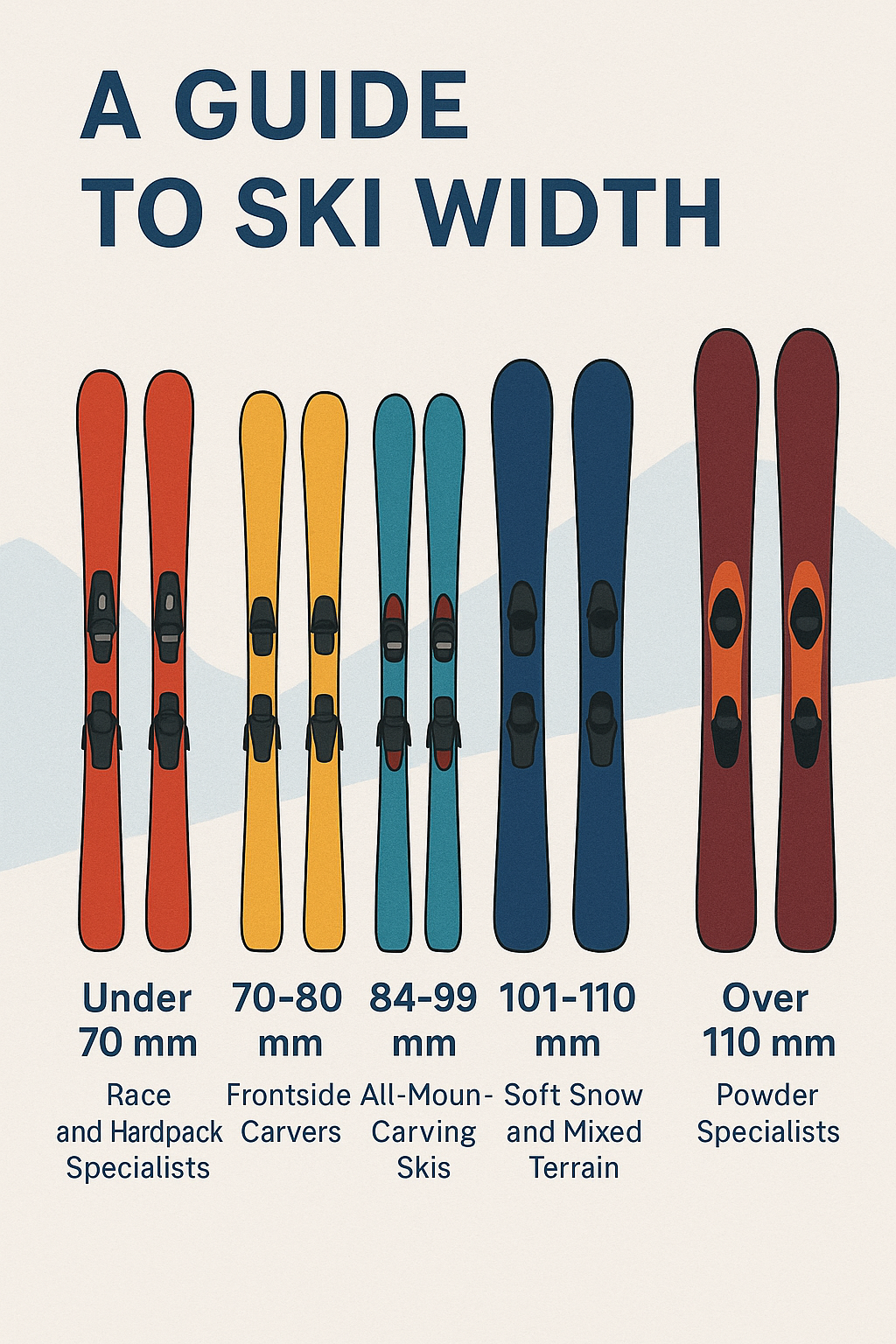
Under 70 mm – Race and Hardpack Specialists
These are purpose-built race skis designed for speed, edge grip, and precision. They’re best suited for the race course or for skiers who love carving tight, powerful turns on firm snow. The narrow waist allows for lightning-fast edge transitions and excellent grip on icy slopes — perfect for training gates at Hunter or making perfect arcs on early morning corduroy.
70–80 mm – Frontside Carvers
Frontside carving skis are made for groomed runs. The slightly wider platform compared to race skis adds a bit more stability and versatility while still maintaining a strong carving feel. These skis are ideal for intermediate to advanced skiers who love linking carved turns on piste but aren’t looking to venture too far off-trail.
80–84 mm – All-Mountain Carving Skis
Sitting in a sweet spot, these skis blend the best of both worlds — the precision of a carving ski with the versatility of an all-mountain ski. The slightly wider waist helps smooth out variable snow conditions without feeling sluggish edge to edge. If you spend most of your time on groomers but want something that handles soft snow or spring conditions confidently, this range is for you.
84–99 mm – All-Mountain Versatility
This is where the “one-ski quiver” lives. These skis perform well across the full range of conditions the Northeast can throw at you — from hardpack mornings to chopped-up snow later in the day. As you move toward the wider end of this range, you’ll find freeride-oriented skis that are more at home off-piste and in softer snow, with extra float and stability for exploring the trees or tackling ungroomed terrain.
101–110 mm – Soft Snow and Mixed Terrain
When the snow gets deeper or softer, these wider skis shine. The larger surface area helps you stay on top of soft snow and crud, providing a smoother ride and easier turn initiation. These are great as a second pair for skiers who mostly ski the Northeast but take trips out West or want a dedicated soft-snow option.
Over 110 mm – Powder Specialists
These are the deep-day skis — wide, surfy, and built to float on top of fresh snow. They’re incredibly fun in deep powder but can feel cumbersome on groomers and hardpack. For most skiers in the Northeast, these are a specialty pair reserved for big snowstorms or destination trips.
A Few Final Thoughts
Ski width plays a big role in how your skis feel underfoot, but it’s only part of the equation. The ski’s shape, flex, and rocker profile all work together to determine performance.
If you’re not sure what’s right for you, check out our Ski Buying Guide or stop by The Pro Ski and Ride in Hunter, NY. Our staff can help you find the perfect width — and model — for the terrain you ski most and the turns you love to make.
Shop Skis Online →